3 February 2026 | Brussels
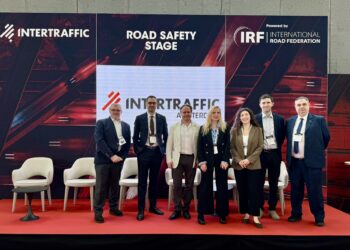
On 2–3 February 2026, senior representatives from road authorities, industry, the automotive sector and European institutions gathered in Brussels for the CEDR–ERF Work Zone Symposium, a high-level event dedicated to improving safety in road work zones across Europe.
Jointly organised by the Conference of European Directors of Roads (CEDR) and the European Union Road Federation (ERF), the symposium provided a platform for strategic discussion on how to better protect road workers and road users in increasingly complex traffic environments.
The event opened with remarks from Eleftherios Eleftheriou, Director of the Public Works Department at the Ministry of Transport, Communications and Works of Cyprus, speaking on behalf of the Cypriot Presidency of the Council of the European Union. In his address, he highlighted the importance of road safety within the broader European transport policy agenda and emphasised that improving safety in road work zones requires strong cooperation between infrastructure operators, policymakers and industry stakeholders.
The intervention also recalled the Presidency’s guiding vision of “an Autonomous Union, Open to the World,” which aims to strengthen Europe’s resilience, competitiveness and ability to protect its citizens. Within this framework, ensuring safe and efficient transport infrastructure — including well-managed work zones — was highlighted as a key element in supporting mobility while safeguarding both workers and road users.
With Europe facing an ageing road network and increasing traffic volumes, the safety of work zones has become a major policy and operational challenge. The symposium therefore brought together senior leaders from national road authorities, infrastructure operators, technology providers and logistics stakeholders to exchange best practices and explore innovative solutions for safer roadworks.
A strategic dialogue on work zone safety
The symposium followed a two-day “lunch-to-lunch” format, bringing together decision-makers and experts for four thematic sessions covering the entire lifecycle of work zones: planning, operations, design, and interaction with vehicles and users.
Throughout the discussions, speakers emphasised that work zones remain among the most hazardous environments on road networks, where the proximity between workers and live traffic creates significant safety risks. Addressing these challenges requires coordinated action across infrastructure design, traffic management, enforcement and technological innovation.
Planning and coordination for safer work zones
The first session focused on the strategic planning phase, where many safety outcomes are determined. Panelists from national road authorities and industry highlighted the importance of integrating safety considerations from the earliest stages of project planning and procurement.
Discussions stressed the need for stronger coordination between road authorities, contractors, police and other stakeholders when preparing roadworks operations. Participants noted that early planning decisions — such as work scheduling, lane configurations and traffic diversion strategies — can significantly influence both worker protection and traffic safety.
Key themes included embedding safety criteria into tendering procedures, improving cross-border harmonisation of work zone practices, and aligning infrastructure maintenance planning with broader traffic management strategies.
Safe installation and operation of work zones
The second session addressed the operational phase of work zones, focusing on their installation, management and dismantling.
Speakers shared practical experiences from across Europe, highlighting solutions aimed at reducing the exposure of workers to live traffic. These included automated or remote-controlled equipment for installing traffic management devices, improved incident detection systems and digital tools that support real-time monitoring of work zone conditions.
Experts also emphasised the importance of clear and consistent temporary traffic management, particularly on high-speed roads such as motorways where driver behaviour can significantly affect safety outcomes.
Design, layout and protection
The third session explored how the design and physical configuration of work zones directly influence safety outcomes.
Participants highlighted the need for more harmonised approaches to temporary road layouts, signage and protective barriers across Europe. Innovative safety equipment — including advanced delineation systems and improved roadside protection devices — was presented as an important step towards reducing vehicle intrusions into work areas and improving visibility for drivers.
Discussions also examined how new design approaches can help accommodate increasing traffic volumes while maintaining safe working conditions for road maintenance teams.
Vehicles, drivers and freight
The final session examined the interaction between work zones, vehicles and road users, with a particular focus on digitalisation and emerging mobility trends.
Experts discussed the role of navigation services and connected mobility solutions in informing drivers about upcoming roadworks and helping them adapt their behaviour accordingly. The session also explored the growing relevance of connected and automated vehicles, which will increasingly need to interact safely with temporary road infrastructure.
Topics included improving driver awareness, integrating real-time work zone information into navigation systems, addressing freight movements near roadworks and leveraging cooperative intelligent transport systems (C-ITS) to communicate with vehicles.
Towards smarter and safer work zones
Throughout the symposium, speakers highlighted the potential of digital technologies and connected infrastructure to transform work zone safety.
Examples included sensors capable of detecting intrusions into work zones, real-time traffic information services, digital twins for planning and monitoring roadworks, and the integration of work zone data into connected vehicle ecosystems.
These innovations could support the development of “smart work zones”, where infrastructure, vehicles and traffic management centres exchange real-time information to prevent accidents, protect workers and optimise traffic flow.
A shared European commitment
The symposium concluded with a clear message: improving safety in work zones requires coordinated action across policy, infrastructure, technology and human behaviour.
Participants agreed that strengthening cooperation between road authorities, industry and technology providers will be essential to deliver practical solutions and more harmonised approaches across Europe. As Europe continues to maintain and modernise its road network, ensuring the safety of both workers and road users in work zones will remain a key priority for the European road community.
All presentations from the symposium are available hereunder: